
Rock Climbing Enters Middle School PE Classes
With rock climbing becoming an official Olympic sport, this once niche extreme sport has gained wide public attention. In recent years, rock climbing has gradually entered primary and secondary school classrooms across China. More and more schools have added climbing to their PE courses, turning it into a new popular project that promotes the integration of sports and education. This special sport not only enriches school PE classes but also benefits teenagers’ physical and mental growth in many ways.
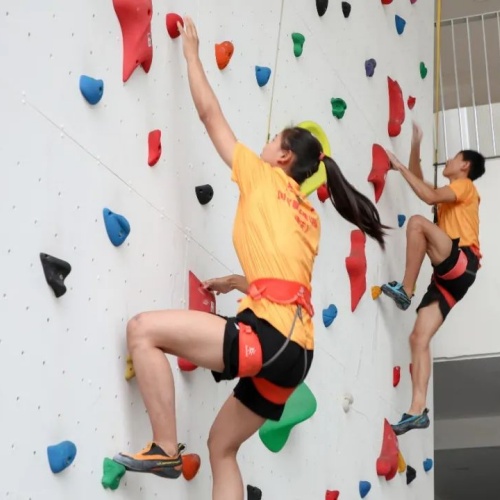
Sports experts point out that rock climbing is a comprehensive sport that greatly helps teenagers grow in three key aspects: physical strength, intelligence and perseverance. During climbing practice, students need to use their arms, legs and core body muscles to support their weight and complete movements. This effectively strengthens their physical fitness and improves body coordination.
Besides physical exercise, climbing also trains students’ thinking ability. When facing different climbing routes, students need to observe carefully, think independently and choose the best foot and hand holds. This process helps teenagers improve their ability to discover, analyze and solve problems. Most importantly, climbing cultivates strong perseverance. Students often fail many times before finishing a route. They learn to face failure bravely, adjust their methods and keep trying, which builds courage and self-challenging spirits.
Many parents have seen obvious changes in their children after learning climbing. A parent named Mr. Wei from Beijing said his child has practiced climbing since the age of four. After nearly four years of training, the child’s physical strength has improved greatly and he can finish three or four pull-ups easily. In addition, the child has developed stronger self-protection awareness and becomes more careful and calm in daily life.
The promotion of campus climbing is supported by national education policies. In 2020, central authorities issued an important document on school physical education, proposing a new PE teaching model: “learning basic skills, practicing regularly and joining competitions frequently”. Rock climbing perfectly fits this educational idea. It allows students to master a long-term sports skill, exercise their bodies and shape good personalities.
The development of teenage climbing has formed a complete training system combining campus teaching and social training. Up to now, nearly 500 primary and secondary schools in China have offered climbing courses. The Chinese Mountaineering Association plans to expand the number to 1,000 schools by 2025, letting more teenagers enjoy the benefits of climbing sports.
At the social level, more than 600 professional climbing gyms have been built in Chinese cities. Every year, 200 excellent gyms are selected to carry out the “Climbing Star” program, popularizing climbing sports among teenagers. The association also holds winter and summer climbing camps, builds youth talent training bases and organizes U-series youth climbing competitions. These activities provide students with enough chances to practice and compete.
This complete system forms a pyramid talent training model for teenage climbing. Basic campus courses lay a solid foundation for all students, and professional competitions select outstanding young athletes. This long-term training system has cultivated many excellent young climbers for China, such as Pan Yufei, Zhang Yuetong and Luo Zhilu.
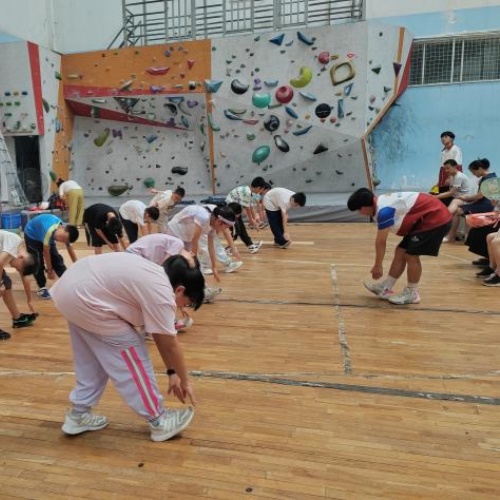
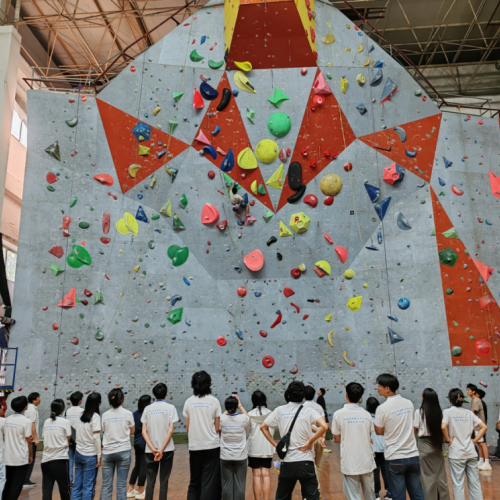
Nowadays, more standardized climbing facilities are designed for middle school teaching. Different from small and scattered climbing walls for simple entertainment, new campus climbing walls adopt scientific zoning design, including climbing areas, warm-up areas, waiting areas and observation areas. This design fits large-class teaching in middle schools, makes PE classes more orderly, improves teaching efficiency and ensures students train safely and effectively.
In the future, the education and sports sectors will continue to deepen the integration of sports and education. By popularizing campus climbing, improving teaching systems and enriching competition platforms, climbing will become a regular and featured PE course in more schools. It will help teenagers exercise their bodies, develop their minds and build strong perseverance, making important contributions to building a powerful sports country.