
Body’s Kinetic chain during climbing: Leg power instead of arm strength
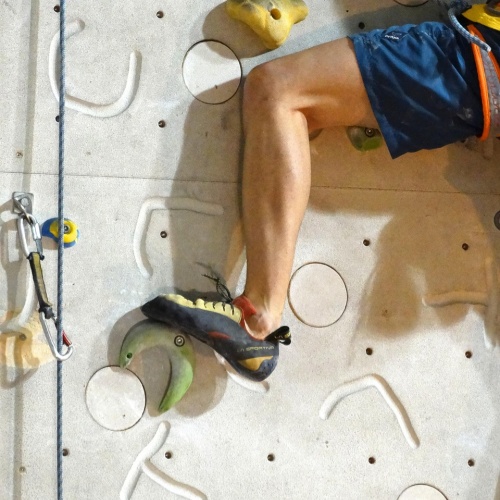
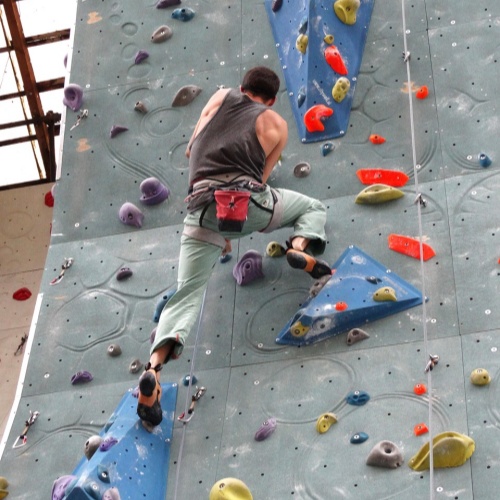
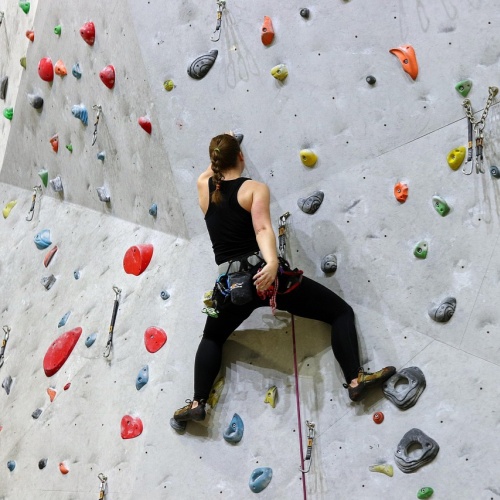
Many new climbers have the same problem: their arms get tired very quickly after just a few minutes of climbing. Their forearms feel sore and stiff, and they cannot hold the wall anymore. Most beginners think climbing is a sport that mainly depends on arm strength. They keep pulling their bodies up with their hands and ignore the power of their legs. However, professional climbing training tells us that climbing is a full-body movement controlled by the human kinetic chain. Smart climbers use leg power to move upward instead of wasting arm strength. Understanding this simple principle is the key to making fast progress.
The body’s kinetic chain means the coordinated movement of different body parts. In rock climbing, the correct power order is legs first, then the core, and arms last. Human legs and hips have the largest and strongest muscle groups. They can support body weight and push the body upward steadily. In comparison, arm and forearm muscles are small and easy to get tired. If beginners rely only on their arms, their physical strength will run out quickly, and they will feel exhausted after each practice. This is why many new climbers cannot finish even simple routes.
A common wrong climbing habit is “arm pulling”. When facing a rock wall, new learners often bend their arms, hang their bodies, and try to pull themselves higher. This posture puts huge pressure on the shoulders and forearms. The body hangs loosely on the arms, and the legs become lazy and relaxed. In this state, climbers cannot stand steadily on footholds, and every small movement costs a lot of energy. This bad habit not only limits climbing ability but also causes muscle soreness and strain after long-term training.
The correct climbing logic is “standing up with legs”. Every upward movement should start from the feet. When climbers find stable footholds, they need to straighten their legs slowly and push their bodies upward. During this process, the arms only play a fixed and balancing role. They do not need to pull hard. The core tightens slightly to keep the body stable. This complete set of movements forms a smooth kinetic chain: feet step firmly, legs push upward, core controls balance, and hands adjust direction gently.
Learning to use leg power can greatly improve climbing efficiency. Many beginners feel that climbing is very tiring because they use the wrong muscle groups. When they change their habits and let legs bear most of the weight, their arms will no longer be overused. Their endurance will improve quickly, and they can practice longer and try more routes. On gentle slab walls, leg power helps climbers walk steadily on small holds. On vertical walls, strong leg pushing force reduces upper-body pressure. Even on slightly overhanging routes, leg tension keeps the body close to the wall and prevents excessive arm consumption.
Coaches often teach beginners a simple training rule: keep your arms straight as much as possible. Straight arms mean the body weight is supported by the legs instead of the upper limbs. Once climbers bend their arms for a long time, their forearms will pump and fail quickly. Therefore, adjusting body posture is more important than practicing strength repeatedly. A relaxed upper body and active lower body are the typical states of skilled climbers.
The kinetic chain theory also explains why posture is more important than brute force. Many students with weak arm strength can climb very well, because they know how to use body coordination. They choose reasonable foot positions, adjust body angles, and use leg pushing force to complete most movements. On the contrary, some students with strong arm strength progress slowly, because they are used to pulling hard and ignore precise footwork and body coordination.
For middle school student climbers, learning the climbing kinetic chain is especially meaningful. It helps them form correct sports habits and avoid over-training arm muscles. Balanced physical exercise protects shoulder and elbow joints and prevents sports injuries. In addition, mastering whole-body coordination improves physical sensitivity, balance and spatial judgment, which are helpful for daily PE learning and physical development.
To change wrong climbing habits, beginners can practice simple targeted training. First, deliberately keep arms straight during climbing and try to stand up with leg strength. Second, focus on finding stable footholds before moving hands. Third, pause and adjust posture when feeling arm soreness, instead of forcing to continue. With one to two months of deliberate practice, students can form a new muscle memory and get rid of arm-dependent climbing.
In short, rock climbing is a coordinated skill sport rather than a brute-force sport. The core of climbing kinetic chain is “leg-driven, core-stabilized, arm-assisted”. Giving up blind arm pulling and learning to use leg power is the first step for every beginner to improve quickly. Correct movement logic allows young climbers to save physical strength, reduce injury risks and enjoy the fun of progressive climbing.