
How to choose climbing harness and quick-draws
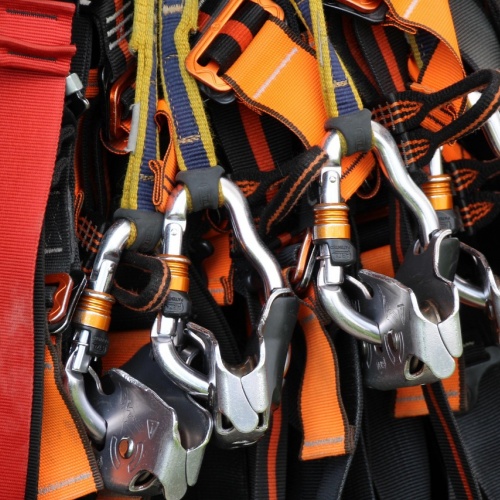
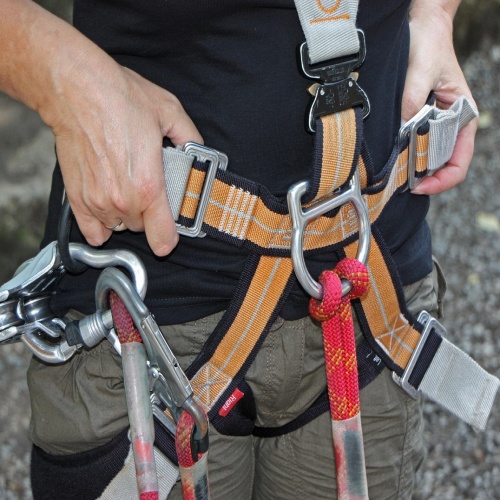
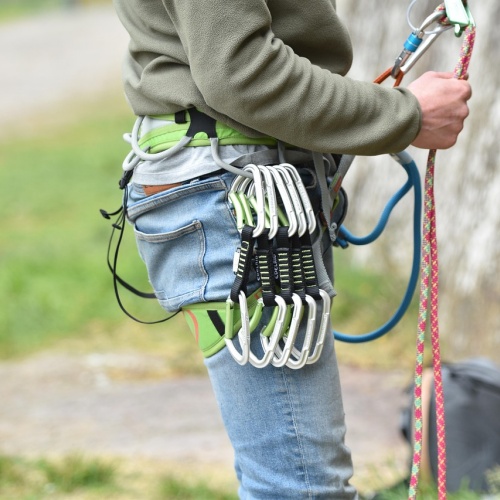
Rock climbing has become a popular sport among teenagers. Many new climbers start with bouldering and then move to roped climbing. Unlike bouldering, roped climbing needs professional safety gear. The two most basic and important pieces of equipment are the climbing harness and quick-draws. They directly protect climbers’ safety during climbing and falling. For beginners, choosing suitable gear is not about picking the most expensive or coolest-looking ones. It is about finding safe, and comfortable climbing tools for your climbing level.
First, climbing harnesses. It is the core safety gear for roped climbing. It is worn around your waist and thighs, connecting the climber to the rope. When a climber falls, the harness holds the whole body’s weight and prevents dangerous slipping. Many beginners make mistakes in size selection. Some buy too loose harnesses for longer use, while others buy too tight ones that hurt their bodies.
The correct standard is quite simple: the waist belt must fit tightly above the hip bones. After fastening the buckle, you can fit one flat hand between the belt and your waist. The leg loops should be snug but not tight enough to block blood circulation.
Different climbing styles need different types of harnesses. Indoor beginner climbing only requires light and soft harnesses. They have thin padding, are easy to move in and cost less. For outdoor climbing, climbers need thicker padding on the waist and legs. Outdoor climbing usually lasts longer, and thick padding can reduce pressure and pain. For long multi-pitch climbing, harnesses with 4 to 6 gear loops are better, because they can carry more quick-draws and safety tools. Safety checking is also necessary. Beginners should check the stitching, belay loop and gear loops before using a new harness. If a harness is old, broken or out of service life, we must stop using it.
Quick-draws are another essential gear for sport climbing. Each quick-draw is made of two carabiners and a connecting sling. One carabiner fixes on the bolt of the rock wall, and the other clips the climbing rope. This simple tool keeps the rope close to the wall and reduces swinging and dragging during climbing. Many beginners only focus on price or color, ignoring safety standards, which causes hidden dangers.
When choosing quick-draws, climbers need to pay attention to gate types. There are bent gates and straight gates. The bent gate is for clipping the rope. Its curved shape makes one-handed clipping much easier on the wall. The straight gate is fixed on the rock bolt and keeps stable during movement. Wire gate carabiners are lighter and safer for daily training, as they are hard to open accidentally during a fall. Solid gate carabiners are stronger and more wear-resistant for rough outdoor rocks.
The length of quick-draw slings also affects climbing experience. Short slings of 10 to 12 centimeters are perfect for straight indoor routes. They reduce rope swing and keep movements stable. Medium slings of 17 to 18 centimeters fit most common outdoor routes. Longer slings are used for crossing or overhanging lines to reduce rope drag. New climbers do not need many kinds of quick-draws. A basic set of short and medium quick-draws is enough for daily practice and skill training.
Safety marks are the most important standard that cannot be ignored. Every qualified carabiner is printed with clear bearing data, such as 22kN, which means it can bear huge impact force during falls. Cheap unmarked carabiners may break under pressure and cause serious accidents. The sling must be complete, thick and free of cracks or wear. Old quick-draws with fading, thinning or broken parts should be replaced in time.
Beginners also need to avoid common buying mistakes. First, do not buy oversized harnesses for future growth. Loose harnesses may slip off during falling and cause safety risks. Second, do not choose too many long quick-draws for indoor climbing. They will increase weight and affect movement flexibility. Third, never ignore gear aging. All climbing gear has a service life. Regular replacement is a basic safety habit.
Professional coaches suggest that beginners should prioritize safety and comfort over appearance and price. For students and new learners, entry-level harnesses and standard quick-draw sets fully meet daily training needs. There is no need to buy professional and expensive gear used by senior climbers. With the improvement of climbing skills, climbers can upgrade their equipment step by step.
In short, harnesses and quick-draws are the most reliable safety barriers for roped climbing. Mastering simple selection skills helps beginners build correct climbing habits, avoid safety risks and enjoy climbing sports more safely and steadily.