
How to Choose the Right Climbing Shoes: Should You Buy Super Tight Shoes?
Climbing shoes are the most important gear for every rock climber. They are the only connection between climbers and the rock surface. A good pair of climbing shoes can greatly improve your footwork and climbing performance. However, many new climbers feel confused when choosing shoes. A lot of beginners believe a popular wrong idea: the tighter the climbing shoes, the better. In fact, choosing too-tight shoes is one of the biggest mistakes for new players. Learning simple and scientific rules can help you pick the most suitable shoes for your level.
Professional climbing shoes use high-friction rubber materials, such as Vibram XS Grip and Stealth C4. These special rubbers create strong friction on different rock surfaces, keeping climbers stable on small or steep holds. When selecting climbing shoes, we need to consider four key points: shoe shape, last shape, sole hardness and proper size. Different shoe designs match different climbing scenes and difficulty levels.
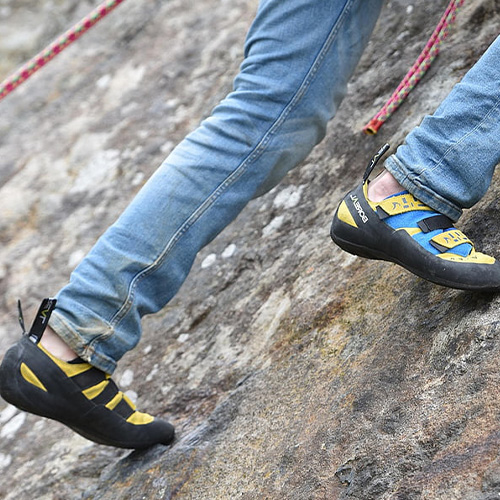
There are three common shoe shapes for climbing shoes. First, flat shoes with straight soles. They are very comfortable and suitable for beginners and long-time climbing. They work well on gentle and flat rock walls. Second, moderate downturn shoes. Their soles bend slightly. They balance comfort and performance perfectly, fitting intermediate climbers for vertical walls and small overhanging routes. Third, aggressive downturn shoes. They have a big curve and let toes focus all strength on tiny holds. However, they are less comfortable and only suit steep bouldering or difficult overhanging climbs, not for long-time wearing.
Last shape also changes climbing experience greatly. Symmetric last shoes have balanced shapes and excellent comfort, which are perfect for beginners and all-round practice. Asymmetric last shoes tilt toward the big toe, making the big toe the main power point. This design helps climbers stand on very small footholds, so most advanced climbing shoes use this asymmetric style.
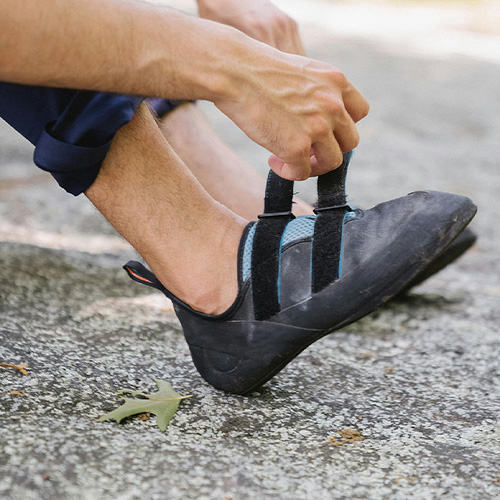
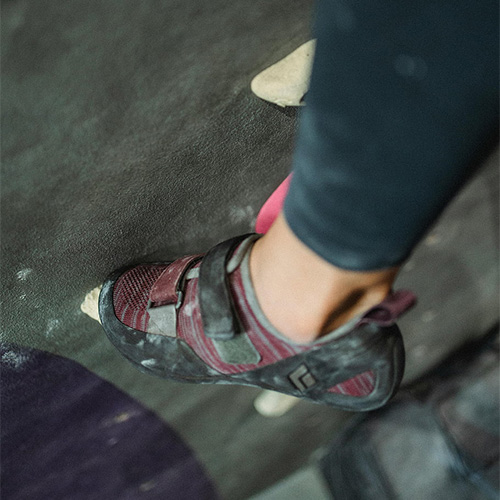
We can also divide climbing shoes by their wearing styles. Lace-up shoes allow fine tightness adjustment and fit almost all climbing situations. Hook-and-loop shoes are easy and fast to wear, perfect for short bouldering routes. Slipper-style shoes are the most convenient but have the weakest foot control, so they are not good for difficult and precise climbing.
For beginners, shoe hardness is very important. Soft soles bring clear foot feeling and real-time feedback, which helps new learners correct wrong footwork. Medium-hard soles offer more support for longer training. Stiff hard soles are stable on hard routes but cover up small foot mistakes, so beginners should avoid them. For new climbers, soft or medium-soft soles are always the best choice.
Size choice is the most confusing part. Many people say climbing shoes must be extremely tight, but the truth is different. Beginners need shoes that fit snugly but cause no pain. Your toes should gently touch the front without strong pressure. You can still curl your toes with slight resistance, and your feet feel comfortable after wearing for 30 minutes. If your feet feel numb, red or sore after ten minutes, the shoes are too small. Although leather shoes will stretch a little after use, the change is only about half a size. Never buy painful shoes just for future stretching.
A 2023 survey from the Rock Climbing Association shows that 73 percent of beginners choose wrong sizes for their first shoes. Some are too big because they fear tightness, while others are too small because they copy professional players. Professionals wear tight shoes because they have stable foot skills and strong ankle muscles. Beginners are still learning basic foot control, so comfort and clear foot feeling come first.
There is a clear standard for renting or buying shoes. If you climb less than 12 times in three months, renting is more economical. If you climb more than 15 times, buying your own pair is better. Renting shoes at the gym is a good way for beginners to try different brands and shapes without spending too much money.
Beginners who only climb indoors should choose neutral or slightly moderate shoes with soft soles and light weight. Those who plan to try outdoor climbing soon can pick medium-hard and durable shoes. You can follow a five-step check list when buying shoes: check toe pressure, feel foot control, test toe movement, feel ankle stability and try 30-minute comfort.
Tight and aggressive shoes only help when you reach higher levels. After you can steadily finish V3 to V4 routes and use precise footwork on tiny holds, tighter shoes will improve your performance by 5 to 10 percent. Before that, comfortable and suitable shoes are always the best choice for fast progress. The best rule for beginners is: fit well, feel clear, and train steadily.